


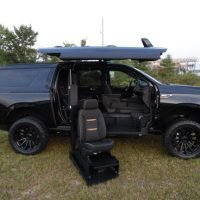


Cargo Flexibility in Large Mobility SUVs
See how large wheelchair-accessible SUVs accommodate changing cargo needs while supporting family outings, road trips, and everyday independence.

The moment you start looking at wheelchair-accessible vehicles, you start to imagine new possibilities for everyday life. From spontaneous coffee runs to family road trips, the right choice can unlock freedom in ways you may not have thought about before. To make that journey smoother, we’ve pulled together these first-time buyer tips for wheelchair-accessible vehicles, giving you practical insights and real-world advice that go beyond the basics and help you feel confident in your decision.
Before you start looking at makes and models, take some time to think about your life and what you need from a vehicle. What does your typical day look like? Are you commuting to work, running errands, or planning cross-country road trips? Consider your aspirations, too. Do you dream of exploring state parks, hauling gear for a hobby, or simply visiting family more often?
Make a list of your “must-haves” and “nice-to-haves.” This personal inventory will become your compass, guiding you toward a vehicle that truly fits your life, not just one that checks a few boxes. This step is about defining what freedom and independence look like for you.
The foundation of any accessible vehicle is the vehicle itself. For years, minivans were the standard, but your options have expanded significantly. Today, manufacturers specialize in converting rugged and stylish SUVs and trucks. These platforms offer benefits like higher ground clearance, four-wheel-drive capability, and a more commanding view of the road.
If your lifestyle involves navigating snowy roads or unpaved paths, or if you simply prefer the robust feel of a larger vehicle, a converted truck or SUV could be the perfect fit. Advanced hydraulic lift systems allow you to enter and exit seamlessly without transferring from your chair, integrating modern technology with powerful automotive engineering.
 Focus on Fit: Measure Everything
A successful conversion is all about precision. Millimeters matter. Before you get too attached to a specific vehicle, take detailed measurements. This includes the height and width of your wheelchair, your seated height in the chair, and the overall space your mobility device needs.
These dimensions will determine whether you can comfortably enter the vehicle, maneuver into the driver or passenger position, and sit with adequate headroom. An experienced mobility dealer can assist with this, but having your own numbers is an empowering first step. A proper fit is more than necessary for both comfort and safety.
Safety is paramount in any vehicle, but it takes on new dimensions in a wheelchair-accessible conversion. All conversions must meet or exceed the Federal Motor Vehicle Safety Standards (FMVSS). Look for vehicles that have undergone rigorous crash testing and feature proven, reliable components.
Pay close attention to the wheelchair docking and securement systems. Whether you choose a manual or an electronic system, it must hold your chair firmly in place while you’re driving. Likewise, the lift or ramp mechanism should include built-in safety features, such as manual overrides and anti-roll stops, for better peace of mind during every use.
The initial purchase price is only one part of the financial picture. To create a realistic budget, you’ll need to consider the total cost of ownership. This includes potential financing interest, insurance premiums (which can sometimes be higher for modified vehicles), and routine maintenance for both the car and the conversion equipment.
Ask about warranty coverage for the conversion components. A quality conversion specialist will stand behind their work with a comprehensive warranty. Understanding these long-term costs from the beginning helps you make a sustainable investment in your mobility.
Reading brochures and watching videos is helpful, but nothing compares to a real-world test drive. You need to experience how the vehicle functions for you. During a demonstration, operate the lift or ramp system yourself. Move your wheelchair into the vehicle and secure it in the driving position.
Pay attention to how it feels. Is the entry process smooth? Can you reach all the primary and secondary controls comfortably? Is visibility clear? This hands-on interaction is the only way to know if a vehicle truly works for your body and your needs.
Navigating the world of accessible vehicles is best done with an expert guide. Certified mobility dealers are specialists who understand the nuances of conversions, funding sources, and vehicle options. They are certified by the National Mobility Equipment Dealers Association (NMEDA), which holds its members to high safety and professional standards.
A good dealer will listen to your priorities, answer your questions, and provide personalized recommendations without pressure. They are your partner in this process, providing invaluable expertise from the initial consultation to post-purchase service and support.
 Consider Your Lifestyle and Climate
Your environment plays a huge role in choosing the right vehicle. If you live in an area with harsh winters, a hydraulic lift system housed within the vehicle is far more reliable than an exposed ramp that can get clogged with ice and snow. A wheelchair truck conversion with four-wheel drive might be essential for navigating slippery roads.
Conversely, if you live in a hot, sunny climate, you’ll want to confirm the vehicle’s air conditioning is robust enough to cool the larger cabin space effectively. Think about where you’ll be parking, the types of terrain you’ll encounter, and how your vehicle can make your life easier in all conditions.
Your vehicle likely needs to accommodate more than just you. Think about who and what you’ll be carrying. Do you need seating for family members, a caregiver, or friends? Will you be hauling groceries, luggage, sporting equipment, or supplies for a service animal?
Some conversions preserve more of the original seating and cargo space than others. When evaluating different models, look at the interior layout. Confirm that there is enough flexible space to handle all your day-to-day transportation needs. Make sure your vehicle is as practical as it is empowering.
After you’ve listed your priorities, taken measurements, and completed a test drive, the final decision often comes down to a gut feeling. One vehicle will simply feel right. It will be the one that sparks a sense of excitement and possibility. This isn’t just a machine; it’s a key to a new level of freedom and travel. Trust your intuition to guide you to the vehicle that meets your needs but most of all, inspires you.
Purchasing a wheelchair-accessible vehicle is a journey of empowerment. By being methodical and informed, you can find a solution that unlocks new possibilities and enhances your independence. These first-time buyer tips for wheelchair-accessible vehicles are here to help you make a choice that you’ll be happy with for years to come.


