





Why Front-Seat Wheelchair Conversions Are Safer
Discover how front-seat wheelchair conversions can support safer travel through secure positioning, tested engineering, and easier vehicle access.

The moment a vehicle is modified for wheelchair access, a practical question rises above the rest: how do those changes affect safety? For buyers, understanding FMVSS for mobility vehicle safety brings clarity to the standards and testing behind a conversion. The goal is not to memorize federal regulations, but to recognize what responsible engineering should look like. With the right information, families approach the buying process with sharper questions and greater confidence.
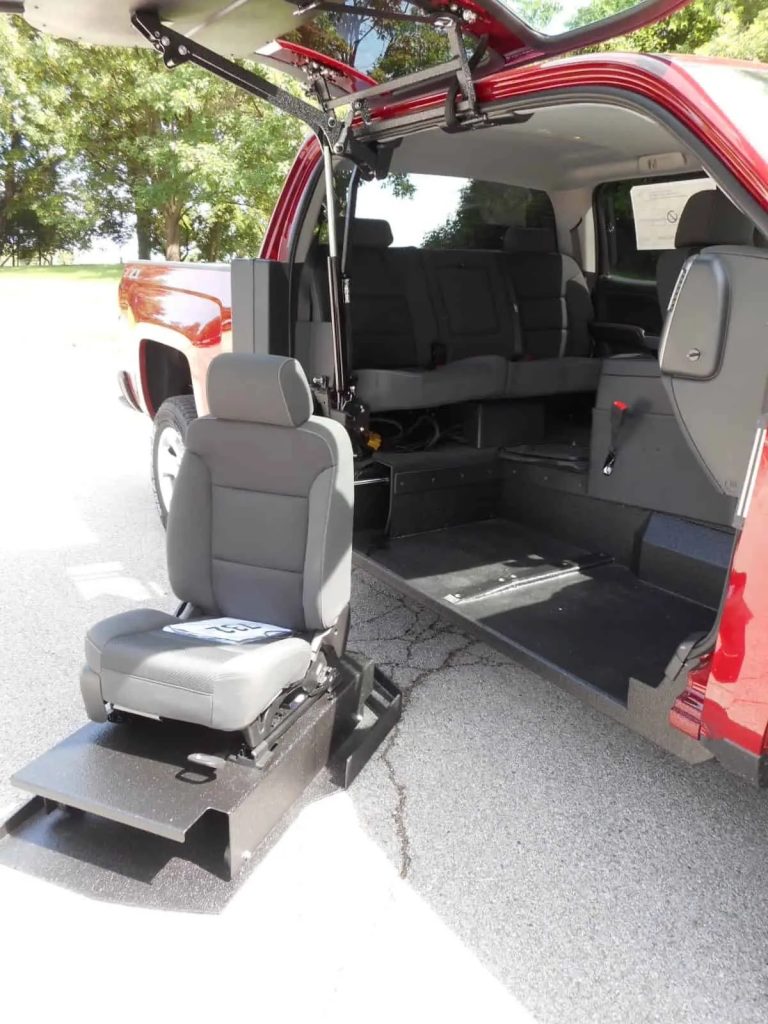
Federal Motor Vehicle Safety Standards, commonly called FMVSS, are federal requirements for motor vehicles and regulated vehicle equipment. The National Highway Traffic Safety Administration (NHTSA) establishes these standards, which appear in Title 49, Part 571 of the Code of Federal Regulations.
Each standard focuses on a defined area of vehicle performance or equipment. One standard might address seating systems, whereas another covers door retention or occupant protection. Because every rule has its own scope, FMVSS should not be treated as a single test that applies to every vehicle in the same way.
The standards differ from state registration rules and voluntary industry review programs. Federal law sets legal requirements. Independent programs provide another layer of evaluation, but they do not replace NHTSA oversight. Knowing the difference helps buyers understand what a provider means when discussing compliance, testing, or safety review.
A production vehicle leaves the manufacturer with safety systems built around its original structure. A mobility conversion changes part of that configuration to create wheelchair access or support adaptive driving equipment. The engineering work must account for how those changes interact with the vehicle as a whole.
For example, modifying a doorway could affect the surrounding structure. Reworking the floor could change seating locations or restraint geometry. Adding equipment increases vehicle weight, making load calculations an important part of the process.
Driver positioning requires the same level of thought. A wheelchair user who drives from their chair needs securement equipment and controls arranged around the vehicle’s original safety features. The finished design should support both accessibility and proper operation.
Not every conversion affects every federal standard. The provider must identify which requirements apply to the work performed. Buyers should receive an explanation specific to the exact vehicle and conversion, not a broad statement lacking supporting detail.
Federal law generally prohibits certain businesses from knowingly deactivating required safety equipment or features. Mobility modifications sometimes require changes that would otherwise conflict with that rule. Part 595 of the federal regulations provides limited exemptions for modifications made to accommodate a person with a disability.
Those exemptions are narrow. They apply only to specified standards and qualifying modifications, so they do not create unrestricted permission to remove safety features. A modifier that relies on an exemption must comply with the applicable recordkeeping, labeling, and disclosure requirements.
Documentation gives the vehicle owner a clear history of the work. A permanent label identifies that the vehicle was modified under the regulation, and written information explains which standards were affected. Those records should remain with the vehicle for future service or resale.
Buyers do not need to interpret every provision themselves. A qualified mobility provider should explain whether an exemption applies and describe what changed. Straightforward answers indicate that the modifier has carefully evaluated the work.
Safety evaluation may rely on engineering analysis, test results, installation specifications, or compliance data. The right method depends on the conversion and the systems involved. A test performed on one component does not automatically establish the performance of the complete vehicle.
Crash testing provides useful information when structural changes affect occupant protection. The value of the results depends on the setup and the configuration tested. Buyers should ask whether the test applies to the same vehicle year, model, and conversion as the one under consideration.
Independent review programs provide another source of information. The National Mobility Equipment Dealers Association (NMEDA) operates a Compliance Review Program for submitted conversions and adaptive equipment. Its published materials identify the specific products or configurations reviewed under the program.
Such a review does not replace federal law. It shows that supporting information was examined under an established process. Buyers still need to confirm that the reviewed configuration matches the vehicle they plan to purchase.

Choosing a Handicap accessible truckinvolves more than selecting a preferred model or lift design. The buyer should understand how the conversion changed the original vehicle and what evidence supports the finished design. A direct conversation with the provider usually offers the clearest answers.
Ask which federal standards were evaluated for the conversion. The provider should explain whether any original safety systems changed and whether a Part 595 exemption was used. The response should connect to the exact vehicle, not a general product line.
Vehicle labels and written disclosures deserve a close look. Buyers should know where the labels are located and what they mean. Keeping copies of the paperwork with maintenance records helps future technicians understand the conversion.
Weight capacity needs attention. Conversion equipment counts toward the vehicle’s total load before passengers or personal items are added. A provider should explain the remaining capacity in practical terms based on the buyer’s expected use.
Service support completes the picture. Specialized lifts and conversion systems require technicians familiar with their operation. Knowing where maintenance and repairs will take place reduces uncertainty after the purchase.
The strongest answers are specific. Model year, conversion design, and equipment configuration all shape the relevant safety information. Clear records make the vehicle easier to service and help the owner understand how the finished conversion was evaluated.
Federal safety standards are technical, yet buyers only need a practical understanding of how those rules connect to the conversion in front of them. Clear documentation and focused engineering provide a stronger basis for evaluating the work than vague assurances.
For families researching accessible trucks or SUVs, understanding FMVSS for mobility vehicle safety leads to better conversations with conversion providers. It helps buyers ask useful questions without turning the purchase into a regulatory exercise.
ATC Mobility offers wheelchair-accessible truck and SUV conversions designed to support greater independence, and our team is ready to discuss conversion details and safety considerations.
ATC Mobility’s converted trucks & SUVs have been fully and successfully crash tested, and it has earned the company membership in NMEDA’s Manufacturer’s Quality Assurance Program (MQAP). This means every conversion follows documented manufacturing procedures, and are built using industry-recognized quality standards designed to protect customers.


